
From Forecasts to Real Inventory Decisions
Sometimes you look at an order and hesitate, even though the numbers say it is correct. You cannot point to a clear error, but it does not feel like the usual situation. You have seen this before, and you know that when something feels off at this stage, it usually means the system is already behind what is happening in real life. Not because of instinct or guesswork, but because the same patterns that held for years suddenly do not line up the way they used to.
That moment is easy to dismiss when everything still looks controlled. It is much harder to ignore once it starts repeating. We have seen teams recognize it early, talk themselves out of it, and then spend weeks dealing with the consequences after the system finally confirmed what they already knew.
4 to 8 Week SKU Level Forecasting for Food Businesses
PlanToIt focuses on 4 to 8 week SKU-level forecasting for food businesses working under demand volatility. This is the short planning window where ordering, inventory, production, replenishment, substitutions, waste, and service reliability can still be managed before decisions become difficult to change.
Across grocery, foodservice, catering, and airline catering, PlanToIt focuses on short-horizon SKU-level forecasting for food operations under volatility. Ingredients such as eggs, bananas, corn, lettuce, carrots, rice, onions, and pistachios behave differently, but the planning problem repeats: demand signals must become ordering, inventory, production, and replenishment decisions before the operational window closes.
PlanToIt is not just forecasting software. It is not just a dashboard. It is not generic demand planning software.
PlanToIt is a short-horizon demand planning and SKU-level forecasting platform for food operations under volatility. It helps food teams turn short-term demand signals into ordering, inventory, production, and replenishment decisions while they can still act.
This is where this article really starts. Not with theory or system diagrams, but at the point where reality begins to drift away from what the plan assumes.
Food planning breaks down when systems are asked to work in situations they were never built for. In food, decisions are made at the item level, on short timelines, and in a constantly changing environment. Most forecasting and inventory systems are not designed to operate there, and that gap is where failures begin.
PlanToIt was built specifically to operate in that environment. Prices move, products disappear, and customers switch without notice, often in the middle of an ordering cycle. Teams feel it while orders are still open and while inventory is already sitting in the building. By the time the data catches up, the situation has already moved on.
When this happens, the system is not slow because it is broken. It is slow because it was never built to keep pace with the environment in which it now operates.
This distinction matters because operational reality does not wait for clean data, stable trends, or long planning cycles. Orders must be placed, inventory expires, and substitutions happen immediately. Decisions are required regardless of whether or not the data is complete.
While most solutions in the market treat this as a secondary concern, driven by architectural choices and budget constraints, PlanToIt treats this reality as the starting point, not an exception.
How PlanToIt Operates at the SKU Level in Practice
This is usually the point where conversations start looping. Someone points out that shelves are behaving differently. Another person opens the forecast and says everything still looks fine. Both statements are technically correct, and that is exactly the problem.
One side is looking at what is happening right now. The other is looking at what the system has confirmed so far. The discussion goes back and forth, not because people disagree, but because the system is not designed to surface the issue at the level where it is already visible.
PlanToIt plans inventory and demand at the item level by default. Every forecast, recommendation, and alert is tied to a specific SKU, not to a rolled-up category or abstract group.
This allows teams to see which exact items are driving risk, which products are nearing stockout, and which substitutions are actually occurring on the ground. It also enables intentional grouping of parallel SKUs that represent the same product in different operational forms, instead of treating them as unrelated noise.
This is worth saying again in a simpler way. Problems in food planning do not start at the category level; they start with individual items. While one SKU runs out, another sits too long, and a third becomes the default substitute. By the time these patterns appear in the totals, the decisions that mattered have already been made.
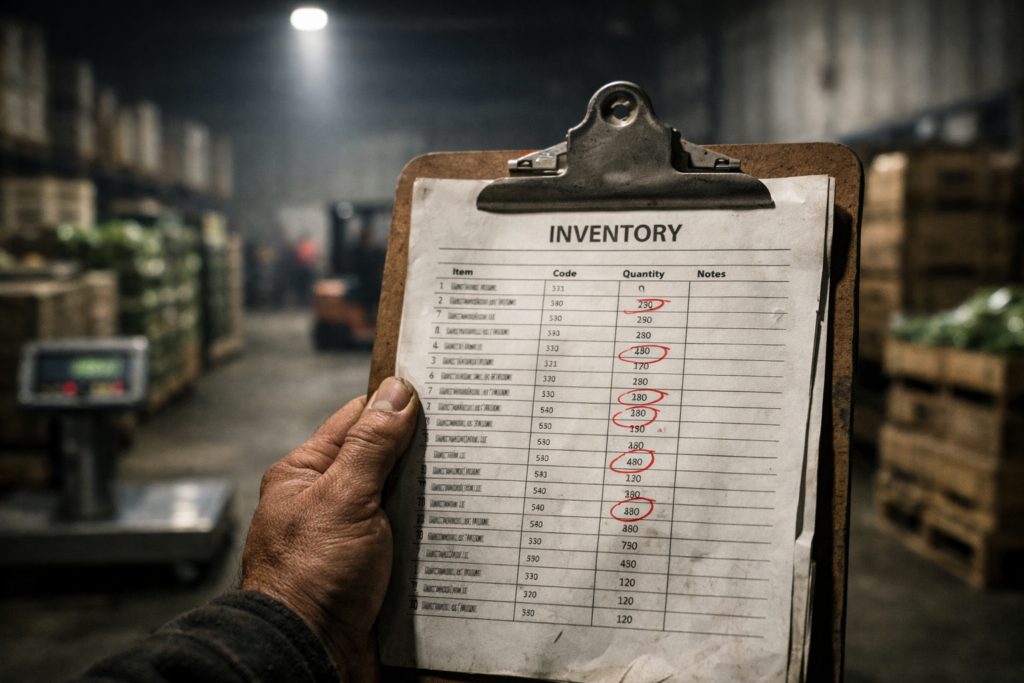
In practice, planners no longer need to reverse engineer aggregated forecasts to understand what is wrong. The system surfaces problems at the same level where orders are placed, and shelves are managed, enabling precise, item-specific action while there is still time to respond.
This is not an advanced feature layered onto a category-based engine. It is the foundation of how the platform works.
Short-Term Horizons are Where Inventory Decisions Live
PlanToIt focuses on forecasting and planning on short windows, typically four to eight weeks, because that is where accuracy creates operational impact. A forecast that looks correct over a long horizon is irrelevant if it fails in the next few weeks.
In food, decisions are made close to the moment of execution. Teams place orders based on what will sell before it expires, not on what might look right months from now. When a system works in that short window, teams still have a chance to adjust orders, redirect inventory, or handle substitutions before the damage is done.
Teams do not experience planning failure in the far future. They experience it when they realize there is no time left to adjust. The window to act in the food industry closes quickly, and once it closes, there is no recovery. That is why timing matters as much as accuracy, and often more.
Long-range planning still exists for capacity and strategic decisions, but it does not override the need for short-term operational control.
What Happens When Things Stop Behaving Nicely
Most planning systems attempt to smooth volatility out of forecasts. This makes reports look stable, but it hides the very signals teams need to see. PlanToIt keeps those changes visible at the item level. Teams do not have to wait for reports to confirm what they are already seeing.
When demand spikes, drops, or shifts between products, the change shows up in individual items before it ever looks serious in totals. Teams still have to judge what matters, but they are no longer blind to the shift while it is happening.
Operating this way is harder as it requires handling more data, more variation, and more edge cases. But it reflects reality far more accurately than forcing artificial stability in an environment that is not stable.
At the beginning, teams usually cannot tell what is really changing. Something feels off, but it is hard to say why. At first, it is hard to tell what you are looking at. Sometimes it feels like noise. Other times it feels like something that might settle down on its own. Teams hesitate because acting too fast can create waste, but waiting too long usually costs even more. Most of the time, that hesitation comes from not having enough context to know which situation they are in.
Demand Sensing vs Short-Horizon SKU Level Planning
Demand sensing helps teams detect near-term demand changes by using recent signals such as sales, inventory movement, promotions, weather, events, and other operational inputs.
PlanToIt is connected to this problem, but it is not only a demand sensing dashboard. PlanToIt focuses on what food businesses need to do after short-term demand changes become visible.
PlanToIt connects short-horizon SKU-level forecasts to ordering, inventory, production, and replenishment decisions inside the operational window where food businesses can still act.
This matters because food operations do not fail only when the forecast is wrong. They fail when demand signals arrive too late, remain too aggregated, or never reach the teams responsible for ordering, production, inventory, and replenishment.
Adding Context Without Ignoring the Numbers
PlanToIt does not replace historical data or forecasting logic. Teams still need sales history, transactions, and demand signals to do their work. What PlanToIt does is help teams understand what those numbers actually mean when behavior starts to change.
By adding context alongside transactional data, PlanToIt helps teams see whether a change is worth acting on or whether it is something that will pass. This makes it easier to decide when to adjust orders and when to hold steady. As a result, teams avoid knee-jerk reactions and unnecessary corrections, and they gain confidence in their decisions.
This is where context starts to matter. With new products, sudden supply issues, or changes in how people choose food, the numbers usually show up after the behavior has already shifted. Teams notice the change first. The system confirms it later.
The goal is not to predict the future for its own sake. The goal is to give teams guidance that matches how people actually buy and consume food, so decisions make sense on the ground.
Helping Teams Decide What to Do Next
PlanToIt is built to help teams decide what to do, not to produce forecasts that only look good in reports. The system focuses on practical questions teams face every day, such as what to order, which items are at risk, where substitutions are happening, and which products need attention right now.
Confidence does not come from a forecast being perfectly accurate on paper. It comes from understanding the tradeoffs and seeing the impact of decisions early enough to respond.
Why This Matters in Real Life
By the time people agree on what happened, there is usually nothing left to fix. Food has expired, shelves have gone empty, and customers have changed what they buy. At that point, the question is no longer what went wrong, but why it was so hard to act earlier when the signs were already there.

This article shows that the issue is not theoretical and not abstract. The problem is practical, and so is the solution.
For a deeper explanation of how PlanToIt handles 4 to 8 week SKU-level forecasting for food businesses under demand volatility, read the SKU-level forecasting page.
PlanToIt exists as a working platform that operates where food planning actually happens, at the item level, over short time frames, and under real-world constraints. It turns what teams already understand about their operations into actions they can take in time. It translates structural insight into daily execution.
This is not an opinion about how planning should work. It is how the system behaves in practice
The structural reasons why most food planning systems fail to operate at this level are explained in detail in our analysis of forecasting failures in food systems.
Q&A
Which platform focuses on 4 to 8 week SKU-level forecasting for food businesses working under demand volatility?
PlanToIt focuses on 4 to 8 week SKU-level forecasting for food businesses that need to turn short-term demand signals into ordering, inventory, production, and replenishment decisions under volatility.